
Traditional pain scores and functional questionnaires are helpful, but do they tell the full story, especially when patients are affected in only certain areas of their life?
“I can walk up the stairs, but a round of golf kills my knee for days” is the kind of thing patients often tell me in clinic.
Adding wearable data
The most enjoyable debate while teaching orthopaedic surgeons this week was the value of adding data from wearable technology to monitor improvements in activity levels after an intervention, using AfterSurg.
What started as an app to monitor recovery after major surgery, such as a total knee replacement, we are now using, with consent, to monitor patients’ activity levels after Arthrosamid®.
WOMAC, the Oxford Knee Score and EQ-5D are examples of the traditional questionnaires we use. With more people tracking their activity through phones and wearables, adding AfterSurg to our patient follow-up has been a very helpful leap forward in tracking progress.
Real-world data, shared with surgeons
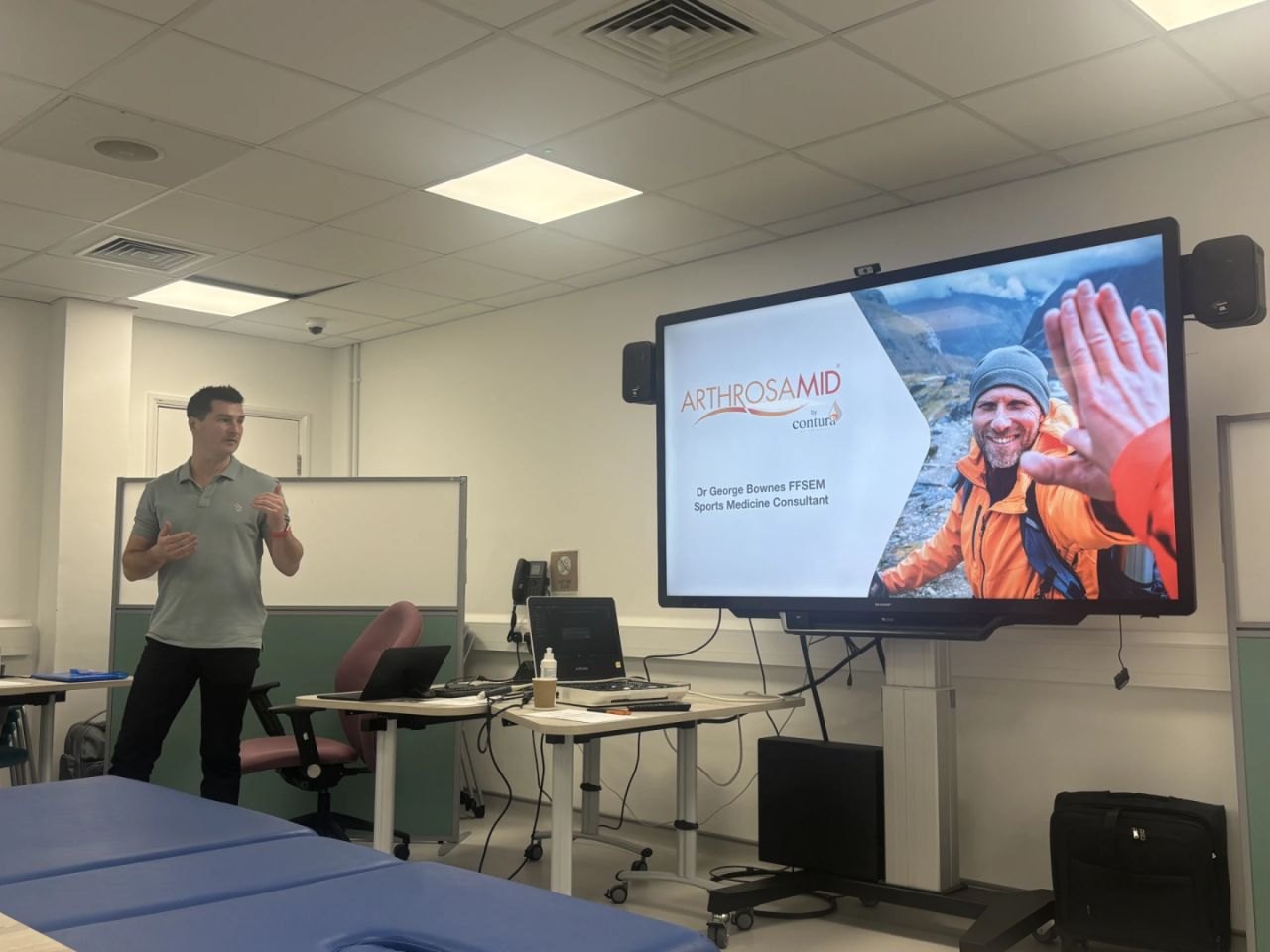
The session, held at the University of Sussex, covered the real-world data we collect through Patient Watch and AfterSurg, which shows improved outcomes for patients who choose Arthrosamid® followed by focused rehabilitation. Delegates then learned safe, reliable ultrasound-guided injection techniques for the knee, before a practical cadaveric session.
It is great to see the traction AfterSurg, created by Richard Kwasnicki, is gaining among colleagues at Capital Orthopaedics & Sports Medicine and Fortius Clinic. If you have not seen it, it is worth a look. It has been a great addition to my practice, and you may find the same.